Low-temperature Evaporative Crystallization
Main Advantages and Characteristics:
Product Quality: It prevents materials from denaturation and decomposition under high-temperature conditions, effectively improving product quality. The technology avoids the damage to product quality caused by high temperatures. Low-temperature crystallization enables better control of crystal growth, resulting in more uniform crystal particle size and higher purity. At lower temperatures, the crystallization rate of the solute is relatively slow, which facilitates the formation of regular crystal structures and reduces the inclusion of impurities and co-crystallization phenomena.
Energy-saving Effect: Traditional evaporation crystallization technology usually needs to be carried out at relatively high temperatures, resulting in high energy consumption. At low temperatures, the boiling point elevation is reduced, which can significantly decrease energy consumption. In the low-temperature evaporation process, heat loss is relatively small because the temperature difference between the system and the outside world is small, reducing energy waste caused by heat conduction and thermal radiation.
Application Scope: In the chemical industry, it can achieve zero discharge of high-salt wastewater and resource recovery, reducing wastewater treatment costs and environmental pressure. In the pharmaceutical industry, it provides an effective method for the production of heat-sensitive drugs, improving drug quality and yield. In the food industry, it preserves the nutritional components and flavor of food, enhancing product quality.
Evaporation Temperature: Designed according to actual needs and determined through experiments. For heat-sensitive substances in the food and pharmaceutical industries, evaporation at a minimum temperature of 29°C has been achieved. Carrying out evaporation and crystallization at low temperatures helps reduce the corrosion of materials on equipment, prolongs the service life of the device, and allows for optimizing the selection of evaporation equipment materials by reasonably setting the evaporation temperature.
Customer Cases:
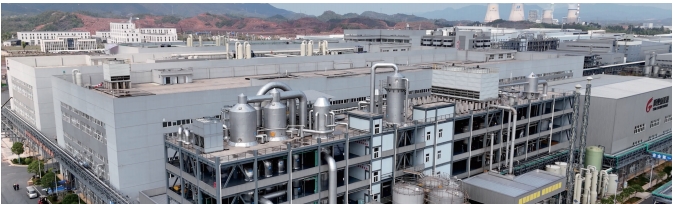
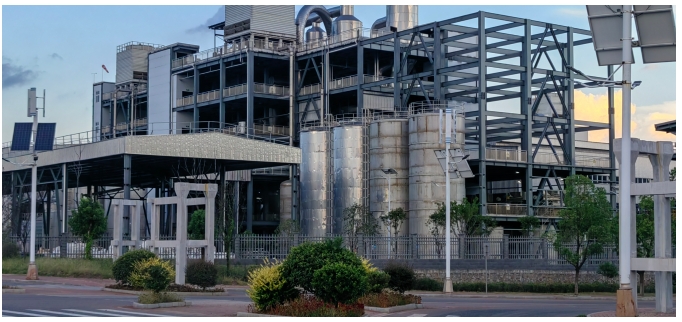
Hebei Chemical's 7-ton/hour MVR low-temperature (29°C) evaporation crystallization system
Material Characteristics: Prone to decomposition at high temperatures, with low yield.
Energy Consumption per Ton of Treatment: Steam: 5 kg、Electricity: 92 KW、Circulating water: 7 tons、Chilled water: 5.7 tons
Low-temperature continuous operation with unattended functionality.

Inner Mongolia Chemical's 7.2-ton/hour MVR low-temperature (40°C) amino acid evaporation system
Material Characteristics: Prone to decomposition at high temperatures, with low yield.
Energy Consumption per Ton of Treatment: Steam: 2.7 kg、Electricity: 62 KW、
Circulating water: 9 tons、Chilled water: 0.25 tons
Low-temperature continuous operation with unattended functionality.

English